
HVAC, Duct & Swamp Cooler Mold in Colorado Springs
A musty blast when the cooler kicks on, black speckling at the registers, a smell that follows the furnace fan: the air system is the one place where mold travels. Independent local companies reply with free quotes. Here is what is specific to Colorado Springs and what the work involves.
Get a Free Quote Call (719) 642-1761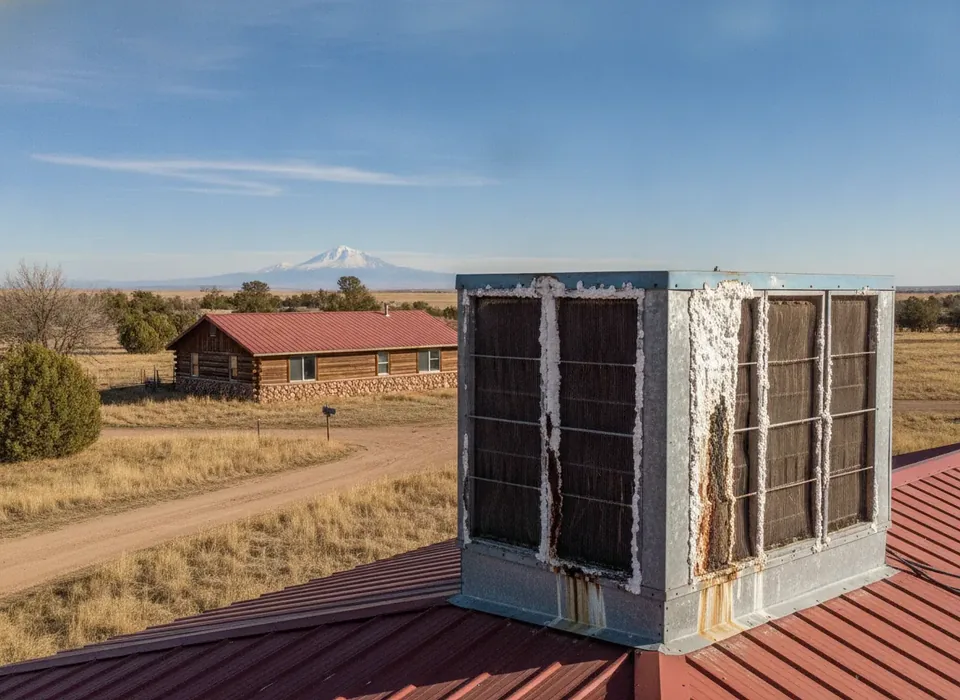
Swamp coolers: the local angle
Evaporative coolers are still common on older Colorado Springs homes, the boxy metal units on roofs in neighborhoods built from the 1950s through the 1980s. They work because the air is dry: water soaks the pads, air pulls through and cools as the water evaporates. The trade-off is that the pads, the pan and the first run of duct stay wet from May to September.
Wet pads plus dust plus warm air is a reliable recipe for growth, and the unit blows that air into every room. The cooler is also a leak point: pans rust through, float valves stick, and the ceiling around the unit stays damp. Inspectors who work this market check the drywall and framing around a cooler, not just the pads.
Central air has its own version: a dirty evaporator coil, a clogged condensate drain, and a furnace humidifier whose pad goes years without a look.
Where mold hides in an air system
- Swamp cooler pads and pan. A slimy pan or a sour smell at startup is the first warning.
- Supply plenum and the first duct run. The wettest, dustiest part of the system, directly downstream of the cooler or the coil.
- Evaporator coil and drain pan. A blocked drain line overflows into the furnace cabinet and the floor below.
- Furnace humidifier. A wet pad in a warm cabinet; scale and growth build up if it is not replaced annually.
- Duct board and flex duct. Fiberglass lining that has grown mold cannot be cleaned effectively; the EPA says it generally has to be replaced.
- Registers and the ceiling around them. Black dots on the grille and nearby drywall are usually condensation mold, not duct mold.
- The return in a damp basement. A musty basement gets pulled through the whole house. Start with the basement.
What the companies do for HVAC and duct mold
Inspect with the system off
Cabinet, coil, pan, plenum and a camera down the main trunks. On a swamp cooler, the pads, pan, cabinet, the duct below it and the ceiling around it, with a moisture meter on nearby drywall.
Decide clean versus replace
Sheet metal duct can be cleaned. Duct board and lined flex that has grown mold generally comes out. A rusted pan or failed coil goes to a mechanical contractor.
Isolate and contain
Registers sealed, system off, HEPA scrubber running so loosened material is captured rather than blown through the house.
Clean and remove
Agitation and HEPA vacuuming of metal duct; removal of contaminated lining or flex; cleaning of the cabinet and plenum. Some companies apply an EPA-registered antimicrobial; ask which product and why.
Fix the moisture and the surroundings
Any wet drywall or framing around the cooler or furnace is handled like any other mold remediation. The HVAC repair itself, from a new cooler pan to a replaced coil or rerouted condensate line, is done by a mechanical contractor holding a PPRBD mechanical license.
Clearance
Visual inspection of the cleaned components, often with a camera, and optional air sampling with the system running.
HVAC and duct mold cost
Systems have many parts, which is why the range is wide.
| Item | Typical range | Source |
|---|---|---|
| HVAC / ducts | $3,000–$10,000 | Fixr 2025 |
| Mold remediation, per sq ft (surrounding walls, ceilings) | $10–$25 (avg ≈ $18) | This Old House 2026; Fixr 2025 ($10–$30) |
| Mold inspection / testing (separate) | $303–$1,044 (avg ≈ $670) | HomeAdvisor 2025 |
| Air-sample lab fees | $250–$350 | HomeAdvisor 2025 |
Typical published ranges, not quotes (Fixr Aug 2025, This Old House Mar 2026, HomeAdvisor 2025). Colorado Springs quotes come from the companies, not from this site.
Swamp cooler service, duct replacement and any mechanical repair are separate quotes from a mechanical contractor. See the cost guide for the remediation side.
Before you pay anyone: the cheap fixes
A lot of "mold in my ducts" calls are solved for the price of pads and a filter. Replace the cooler pads, scrub and drain the pan, flush the condensate line, swap the humidifier pad, change the furnace filter, and run the cooler with a window cracked in each room so humid air moves out. If the smell is gone in a week, you are done. If not, or you can see growth in the cabinet or duct, get quotes.
Insurance rarely covers mold in an air system, because it reads as maintenance rather than a sudden event; a cooler pan that flooded the ceiling in one afternoon is the exception, and the mold sublimit still applies. In homes built before 1989, old duct insulation, pipe wrap near the furnace and ceiling texture around a cooler are suspect materials, so ask whether an asbestos test is needed before anything is cut. More in the swamp cooler mold guide.
When it is urgent
Shut the system down if you can see growth at the registers or smell it strongly when the fan runs, and leave it off until someone has looked. Anyone with asthma, allergies or a weak immune system should see a doctor about symptoms without waiting for a quote. A cooler or condensate line that leaked into the ceiling is a water event: the 24 to 48 hour drying window applies.
Questions to ask the companies
- Can you show me the growth on camera before and after?
- Which duct will be cleaned and which replaced, and why?
- Who does the mechanical repair, and is that contractor registered with PPRBD?
- What product, if any, will you apply inside the ducts?
- What training do your techs hold, and can you send proof of general liability insurance?
Swamp cooler requests cluster on the Westside, in Manitou Springs and Security-Widefield; newer homes in Falcon are more often coil and humidifier problems.
Get HVAC and swamp cooler mold quotes
Tell us whether you have a swamp cooler or central air, where you see or smell the growth, and whether the unit has leaked. Independent local companies reply with quotes.
Independent local companies reply to you directly. No obligation, and you decide who to hire. Prefer to talk? Call (719) 642-1761
HVAC, duct and swamp cooler mold questions
Why does my swamp cooler smell musty?
The pads stay wet all season, the pan holds standing water, and both collect dust and minerals. Together that is a mold and bacteria habitat sitting in your air supply. A musty smell at startup is common; a smell that persists after fresh pads and a pan cleaning points to growth in the cabinet, the duct or the ceiling around the unit. That is when quotes make sense.
Can a swamp cooler cause mold elsewhere in the house?
It can. Evaporative cooling adds moisture to the air; a Colorado pediatric study found units raise indoor humidity by about 10 percent. In a poorly ventilated bathroom or a basement that is already damp, that increase can tip surfaces into growth. Opening windows the way the cooler is designed to work keeps humidity moving out instead of building up.
Does duct cleaning remove mold?
Ordinary duct cleaning removes dust. The EPA recommends duct cleaning only when there is visible mold growth inside hard-surface ducts or on components, and it notes that insulated ductwork or duct board that gets wet and moldy usually has to be replaced because it cannot be cleaned effectively. Ask the company to show you the growth before and after.
How much does HVAC or duct mold remediation cost?
Fixr's 2025 range for HVAC and duct mold is $3,000 to $10,000, which reflects the number of components involved: air handler, coil, plenum, duct runs and registers. Replacing moldy duct board or flex duct and servicing the swamp cooler are usually separate. These are published national ranges, not quotes; local companies set their own prices.
Who fixes the swamp cooler or furnace itself?
A mechanical contractor. Mold companies clean and remediate; repairing, rebuilding or replacing a cooler, air handler or coil is HVAC work that goes to a mechanical contractor holding a PPRBD mechanical license. Many remediation companies have a mechanical partner they coordinate with. Ask who does which part before you sign.
Seeing or smelling mold? Get a clear plan.
Free, no-pressure quotes from independent companies across Colorado Springs, Monument, Fountain, Woodland Park and the Pikes Peak region.