
Mold After Water, Flood & Storm Damage in Colorado Springs
Burst pipes in a cold snap, snowmelt in the basement, monsoon flash floods, sewer backups: this is how most Colorado Springs mold starts. Independent local companies reply with free quotes for drying and remediation. Here is what the first 48 hours should look like.
Get a Free Quote Call (719) 642-1761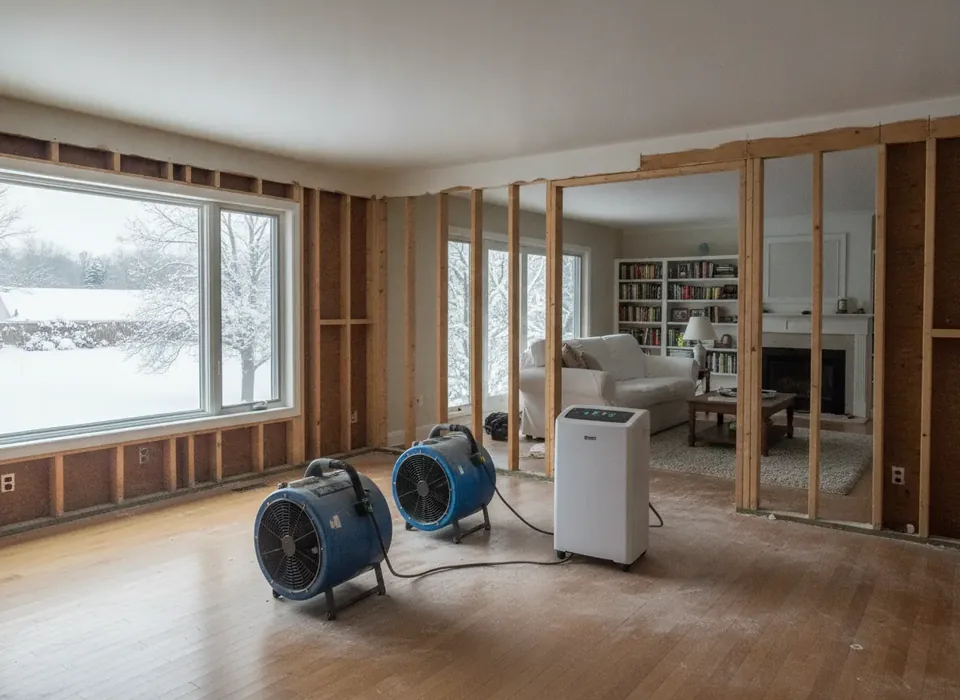
The 24 to 48 hour window
The EPA's advice after any water event: dry wet materials within 24 to 48 hours. Inside that window, most of what got wet can be saved. Past it, drywall paper, carpet pad and insulation start supporting growth, and the job changes from drying to remediation.
Colorado Springs makes that window hard to hit, because so much of the water here arrives when nobody is watching. A supply line freezes on a sub-zero night and splits; the house looks fine until the thaw. The fire department made that point after the January 2024 cold snap, when it handled at least 25 burst pipes and sprinkler heads in a few days: the damage often shows up only after things warm up. February 2021 brought more than 200 broken sprinkler line reports in a short stretch.
Snowmelt and summer storms are the other half. March is the snowiest month, and about 65 percent of the year's rain falls May through August in afternoon downpours that overflow window wells.
Water damage restoration in Colorado Springs: what the companies do
"Water damage restoration" is what most companies call the first phase, and many of the remediation companies that reply through this site do both. The sequence matters more than the label.
Stop the water and make it safe
Main valve off, power off to wet circuits, a plumber or roofer on the way. If water came up through a drain, nobody goes in without boots and gloves.
Classify the water
Clean supply water, grey water from an appliance, or Category 3 water from sewage, groundwater or flooding. The category decides what is dried and what is removed.
Extract and remove
Pumps pull standing water. Carpet pad comes out. Wet drywall gets a flood cut, usually 12 to 24 inches above the water line, and wet insulation is bagged.
Dry and monitor
Air movers and dehumidifiers run for several days. Techs meter the framing and slab daily and keep a drying log. Ask for it.
Remediate anything that grew
Growth goes under containment with HEPA filtration and the affected material is removed. See how mold remediation works.
Rebuild
New drywall, insulation, trim and flooring. Framing or plumbing changes need a PPRBD permit pulled by a PPRBD-registered contractor.
The local water events behind most requests
Frozen and burst pipes. Supply lines in exterior walls, garages, crawl spaces and unheated basements split in deep cold. The split is small; the volume is not. See the frozen pipe water damage guide.
Snowmelt and spring storms. Frozen ground cannot absorb a fast melt, so water runs along the foundation into window wells and cracks. Finished basements hide the result. See basement and crawl space mold.
Monsoon flash floods and burn scars. July and August thunderstorms can drop an inch in an hour. The Waldo Canyon burn scar sent mud and water into Manitou Springs and the west side in 2013, and El Paso County had federal flood declarations in 2013, 2015 and 2023. Floodwater is Category 3.
Sewer backups. Tree roots, grease and storm surcharge push wastewater up through the lowest drain. Colorado Springs Utilities' policy makes the service line the homeowner's problem, excludes storm events, and recommends a specialist cleanup company for the bacteria involved.
What water damage and mold cleanup costs
Drying is usually priced per day of equipment; remediation per square foot or per room.
| Item | Typical range | Source |
|---|---|---|
| Mold remediation, per sq ft | $10–$25 (avg ≈ $18) | This Old House 2026; Fixr 2025 ($10–$30) |
| Typical whole job | $1,500–$9,000 (national avg ≈ $3,500) | Fixr 2025 |
| Basement | $1,500–$4,000 | Fixr 2025 |
| Small area ≈ 200 sq ft | $2,000–$5,000 | This Old House 2026 |
| Whole house | $10,000–$30,000 | Fixr 2025 |
Typical published ranges, not quotes (Fixr Aug 2025, This Old House Mar 2026, HomeAdvisor 2025). Colorado Springs quotes come from the companies, not from this site.
Extraction, drying equipment, contents and rebuild are extra and vary with how long the water sat. Room-by-room detail is on the cost guide.
Insurance: sudden events versus floods
Standard homeowners policies draw a hard line. A burst pipe, a failed water heater or a broken appliance hose is a sudden covered event, and mold that follows is typically paid up to the mold sublimit, commonly $1,000 to $10,000. Flooding from outside is excluded entirely; that is what a separate flood policy is for. Slow leaks and neglect are excluded. Sewer backup needs its own endorsement. Colorado's Division of Insurance tips on burst-pipe claims: stop the water, document with photos and video before anything is removed, keep receipts, report promptly. Never assume the claim will pay until the adjuster confirms it in writing. See does homeowners insurance cover mold in Colorado.
Flood cuts remove a lot of drywall. In homes built before 1989 the texture and joint compound may contain asbestos, so ask whether an asbestos test is needed before tear-out; pre-1978 homes bring lead-paint rules for paid work that disturbs paint.
What to do in the first hour
- Shut off the water main.
- Cut power to wet rooms at the breaker if you can do it without standing in water.
- Photograph and video everything before you move it.
- Keep children and pets out of floodwater and sewage; do not run the furnace fan through a wet basement.
- Request quotes the same day. Drying on day one is cheaper than remediation on day ten.
Questions to ask the companies
- Will you classify the water and put the category in writing?
- How many days of drying do you expect, and will I get the moisture log?
- Do you bill my insurer directly, and what happens if the claim is denied?
- What training do your techs hold, and can you show general liability insurance?
Requests come from Fountain, Security-Widefield, Manitou Springs and everywhere between.
Get water damage and mold quotes fast
Tell us what the water was (pipe, appliance, snowmelt, flood, sewer), when it happened and what is wet. Companies that handle drying and remediation reply directly.
Independent local companies reply to you directly. No obligation, and you decide who to hire. Prefer to talk? Call (719) 642-1761
Water damage and mold questions
How fast does mold grow after a burst pipe or flood?
The EPA's guidance is to dry wet materials within 24 to 48 hours to prevent mold growth. After that, assume growth has started inside wall cavities and under flooring even if nothing is visible. Water from a pipe that burst during a cold snap often sits for days before the thaw reveals it, which is why freeze events produce so many mold jobs weeks later.
Does homeowners insurance cover mold after water damage in Colorado?
A burst or frozen pipe, a failed appliance hose or a water heater rupture is usually a covered sudden event, and mold that follows is paid up to the policy's mold sublimit, often $1,000 to $10,000. Flooding from outside, snowmelt seepage and long-term leaks are generally excluded. Sewer backup needs a separate endorsement. Document before cleanup and read your policy; never assume.
What is Category 3 water and why does it matter?
Category 3 is grossly contaminated water: sewage, floodwater, groundwater and any water that has sat long enough to become contaminated. Porous materials it touches, such as drywall, carpet and pad, are removed rather than cleaned, and the work calls for protective gear and containment. Clean supply water that is dried within a day or two is a much smaller job.
Can I dry the house myself with fans?
For a small, clean spill caught the same day, yes: remove wet pad, run fans and a dehumidifier, and check with a moisture meter. For water that reached wall cavities, came from a sewer or flood, or sat more than two days, box fans move spores around without drying the structure. Companies use air movers, dehumidifiers and meters to prove the framing is dry.
Who is responsible for a sewer backup in Colorado Springs?
Colorado Springs Utilities' policy assists with damage from verified blockages in its main line when the customer was not negligent. The service line from your house to the main, and backups caused by it, are the homeowner's responsibility, and CSU excludes storm and flood events. Its policy recommends a specialist cleanup company because of bacteria in wastewater. Check for a sewer backup endorsement on your policy.
Seeing or smelling mold? Get a clear plan.
Free, no-pressure quotes from independent companies across Colorado Springs, Monument, Fountain, Woodland Park and the Pikes Peak region.