
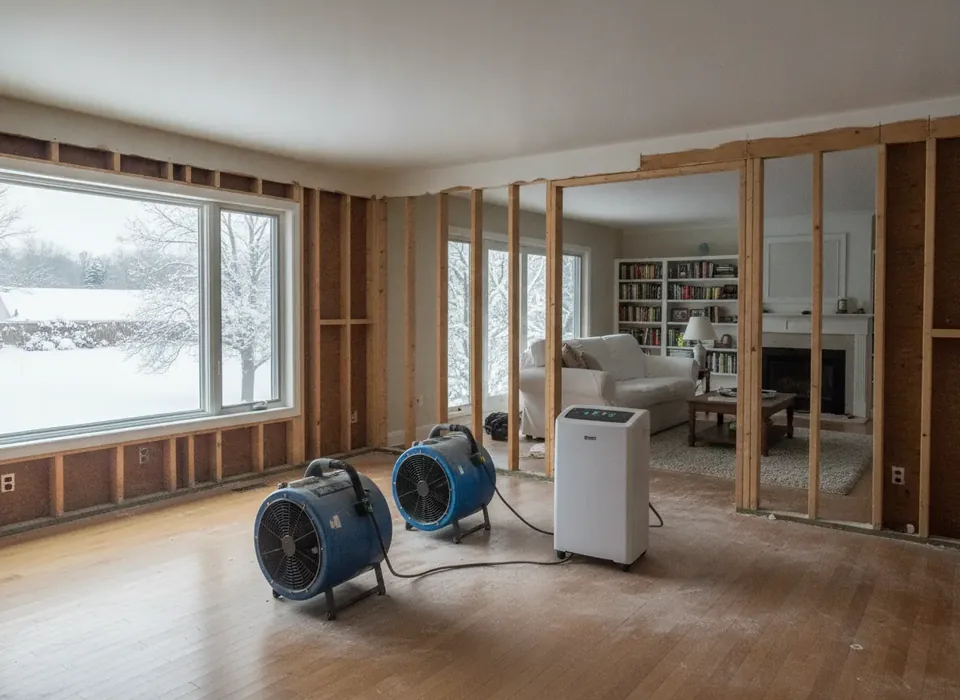
A frozen pipe is quiet until it is not. Water in a supply line freezes, expands and splits the pipe or a fitting; nothing happens while it stays frozen. Then the thaw comes, the ice plug lets go, and water runs at full pressure into a wall, ceiling or crawl space until someone finds it. In a house that is empty for the weekend, that can be thousands of gallons.
Colorado Springs has seen this at scale twice in recent memory. During the February 2021 cold snap, city firefighters answered more than 200 reports of broken sprinkler lines in a few days. In January 2024, at least 25 burst pipes and sprinkler heads were reported in under a week after January 12, including one at fire department headquarters, and the fire department pointed out that the damage often shows up only after the thaw. The record low here is -27°F, and single-digit nights are routine most winters.
The clock. EPA guidance is that wet materials dried within 24 to 48 hours usually will not grow mold. Past that window, growth on drywall paper, carpet pad and wood framing becomes likely, and the job changes from drying to remediation.
Where pipes freeze in Pikes Peak region homes
- Supply lines in exterior walls, especially kitchen sinks on an outside wall and bathrooms over garages.
- Crawl spaces with open vents or missing insulation on the water line.
- Unheated basements, garages and attics where a line runs to an outdoor spigot or a second-floor bath.
- Fire sprinkler lines in commercial and multifamily buildings, which is where many of the 2021 and 2024 calls came from.
- Hose bibs that were left connected to a hose in November.
- Furnace-humidifier feed lines and refrigerator ice-maker lines, both small, both easy to miss.
The first 48 hours, in order
Hour 0: stop the water
Shut the main valve. In most local homes it is where the service line enters the basement or crawl space, near the water meter. If the line that burst feeds a fire sprinkler system, call the fire department before shutting it off. Turn off power to any circuit that got wet.
Hours 0–2: document
Photograph and video everything before you move or remove anything: the split pipe, standing water, wet drywall, stained ceilings, damaged contents. Save the burst section of pipe if a plumber removes it. This is the single most important step for an insurance claim, and the Colorado Division of Insurance's burst-pipe advisory says the same.
Hours 2–24: get the water out and the air moving
Extract standing water with a wet vacuum, pull up wet area rugs, and lift furniture onto blocks. Open cabinet doors under sinks. Run fans and, if you have one, a dehumidifier. Heat helps drying only if the air can carry moisture out, so do not just turn up the furnace in a closed house.
Hours 24–48: find the hidden water
Water follows gravity into places you cannot see: inside the wall below the break, under subfloor, along ceiling drywall to the next joist bay, into the insulation above a garage. Carpet pad, drywall and insulation that are still wet at this point usually come out. This is where a water damage and mold company earns its fee: moisture meters and thermal cameras show the true extent, and a flood cut of the lower wall lets the framing dry.
Day 3 and beyond: watch for mold
A musty smell, discoloration at drywall seams, bubbling paint or a soft baseboard means moisture is still there. At that point, the drying job becomes a remediation job with containment, HEPA filtration and material removal. The mold removal page describes what that looks like.
Why the wall matters more than the floor
Most of the water from a burst pipe ends up inside a wall cavity or a floor system, not on the surface. Dry air in Colorado Springs makes the room feel dry within a day, which fools people. Meanwhile the back of the drywall, the insulation and the bottom plate stay wet for a week or more. Mold grows on the paper facing of drywall first, out of sight. If a company offers to dry the house without opening walls or measuring behind them, ask how it will confirm the cavity is dry.
Insurance: the one mold cause that is usually covered
Standard homeowners policies generally cover water damage from a sudden, accidental event, and a burst pipe is the classic example. Mold that results from that covered event is usually covered too, up to the policy's mold sublimit, which commonly sits between $1,000 and $10,000. Three things can undermine a claim:
- Neglect. If the house was left unheated for an extended period, insurers may argue you failed to take reasonable care. Many policies require you to maintain heat or shut off and drain the water when the home is vacant in winter.
- Gradual leaks. A pinhole that dripped for months is a slow leak, not a burst, and slow leaks are usually excluded.
- Missing documentation. No photos, no saved pipe, no record of when the loss happened. A 2021 federal ruling in Colorado denied water and mold coverage because the insured could not show the loss occurred during the policy period.
Check your sublimit, document before cleanup, and never assume the payout. Some remediation companies bill insurers directly; ask. The broader picture is in does homeowners insurance cover mold in Colorado.
What the cleanup costs
Drying alone is often a few hundred to a couple of thousand dollars depending on equipment days. If mold has started, published remediation ranges run $10–$25 per square foot of affected area, with typical whole jobs at $1,500–$9,000 nationally (Fixr 2025, This Old House 2026). Plumbing repair and rebuild of drywall and flooring are separate. The cost guide has the full table.
Preventing the next one
Disconnect hoses and shut off exterior spigot valves before the first hard freeze. Insulate lines in crawl spaces and exterior walls. During a cold snap, let a faucet on an exterior wall drip, open cabinet doors under sinks on outside walls, and keep the furnace at a steady setting rather than a deep nighttime setback. If you travel in winter, set the thermostat no lower than the mid-50s, have someone check the house, or shut off and drain the water. Know where the main shutoff is before you need it.
Frequently asked questions
How long after a burst pipe does mold start?
EPA guidance is that materials dried within 24 to 48 hours usually will not grow mold. After that, growth on drywall paper, carpet pad and framing becomes likely, especially inside wall cavities where air does not reach.
Does homeowners insurance cover mold from a frozen pipe?
Often yes, because a burst pipe is a sudden, accidental event, and mold resulting from a covered event is usually covered up to the policy's mold sublimit, commonly $1,000–$10,000. Claims can be denied for neglect, such as leaving a home unheated, or for lack of documentation. Check your policy and photograph everything before cleanup.
The room feels dry already. Is the wall dry?
Probably not. Colorado Springs air dries surfaces quickly, but the back of the drywall, the insulation and the bottom plate inside the wall can stay wet for a week or more. Companies use moisture meters and thermal cameras to check, and often make a flood cut so the cavity can dry.
Should I call a plumber or a remediation company first?
Shut off the water first, then both. The plumber fixes the pipe; the water damage company extracts water, dries the structure and checks for mold. Many homeowners call the water damage company first because the drying clock is running, and have the plumber repair the line the same day.
Ready for numbers from local companies? Request free quotes or call Call (719) 642-1761. Colorado Springs Mold Pros is a free quote service, not a mold company; independent local companies reply to you directly.