
If you rent in Colorado Springs and you have just found mold spreading from a leak, a damp basement wall or a ceiling stain, the single most useful thing to know is this: Colorado's warranty of habitability law puts a clock on your landlord. It is a short one.
This guide explains what the statute says, what counts, how to give notice so the clock starts, and how post-remediation testing fits in. It is general information, not legal advice.
Colorado Springs Mold Pros is a free quote service. We connect Colorado Springs-area tenants, landlords and homeowners with independent local mold inspection and remediation companies for free, no-obligation quotes. We are not a law firm and we are not a contractor.
Does Colorado have mold laws for rentals?
Yes. Colorado has no state mold license and no general mold code for private homes, but rentals are different. The warranty of habitability (C.R.S. 38-12-501 through 38-12-512) lists conditions that make a rental uninhabitable, and since 2019 that includes mold associated with dampness.
The law changed twice in recent years:
- 2019 (HB19-1170): added dampness-related mold as an uninhabitable condition and gave landlords 96 hours after notice to contain it, stop the water and run HEPA filtration.
- 2024 (SB24-094): rewrote the timelines. The mold step is now 72 hours. Many older blog posts and law-firm summaries still say 96 hours; the signed act says 72.
What C.R.S. 38-12-503(12) requires within 72 hours
Once a landlord receives notice of mold associated with dampness, the statute requires the landlord to mitigate the immediate risk by doing all of the following within 72 hours:
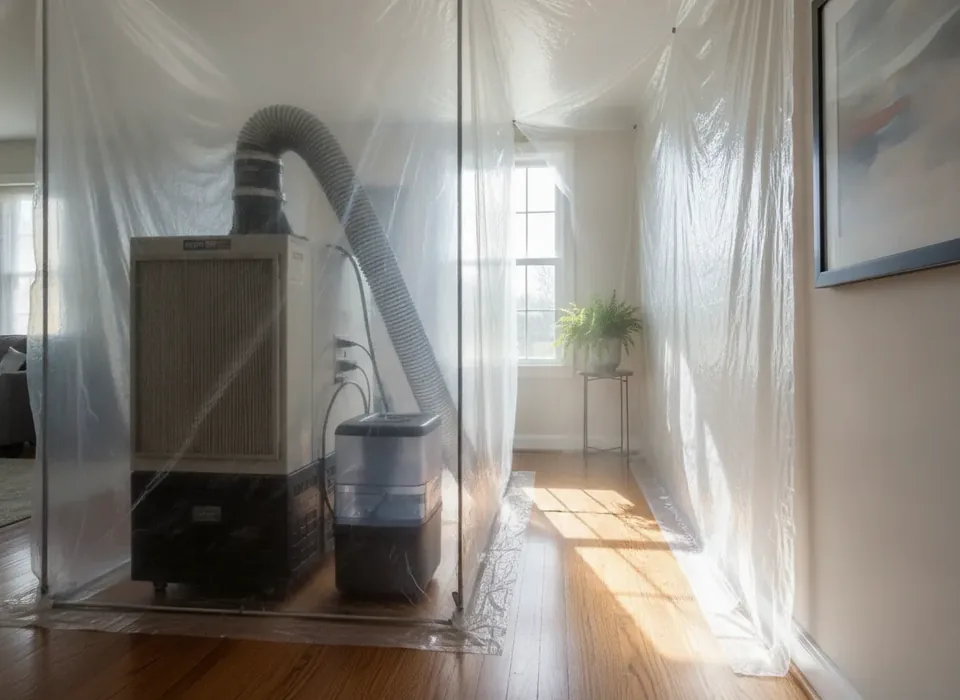
Install containment
Plastic sheeting or a similar barrier around the affected area so spores are not spread through the rest of the unit while the problem is being fixed.
Stop the active water source
Fix or shut off whatever is feeding the mold: the leaking supply line, the failed roof flashing, the seeping foundation wall. Mold that is cleaned without the water being stopped comes back.
Run a HEPA air filtration device
A high-efficiency particulate air filtration unit inside the containment to capture airborne spores.
The 72 hours are the emergency phase, not the whole job. The same subsection goes on to require the landlord to:
- maintain containment through remediation;
- eliminate the moisture and dry the affected materials;
- decontaminate or remove damaged materials;
- evaluate whether the remediation worked, including post-remediation testing for the existence of mold; and
- reassemble the area in a way that controls moisture.
Why post-remediation testing matters here. On most homeowner jobs, testing after cleanup is optional. In a Colorado rental, the statute lists it as part of the landlord's duty. Ask for a copy of the results. An independent inspector, not the company that did the removal, is the cleaner way to get them. See mold inspection and testing for how clearance sampling usually works.
The general repair deadlines sit alongside the mold rule
The Colorado Legislative Council's April 2025 renters' rights summary describes the broader timeline this way:
| Condition | Landlord must begin remedial action | Presumed failure if it persists |
|---|---|---|
| Materially interferes with life, health or safety | Within 24 hours of notice | 7 days |
| Other uninhabitable conditions | Within 72 hours of notice | 14 days |
| Mold associated with dampness | Containment, water stopped, HEPA running within 72 hours; full remediation and testing to follow | Depends on which category the mold falls into |
Plain-language summary of the signed act and the Legislative Council summary; the statute text controls.
Mold that materially interferes with a tenant's health or safety is listed separately in 38-12-505(1)(b), so the faster 24-hour track can apply to serious cases. Which track fits your situation is a question for a lawyer, not a website.
What the law does not cover: the minor-mold exclusion
C.R.S. 38-12-505(1)(a) excludes mold that is minor and found on surfaces that can accumulate moisture as part of their proper functioning and intended use. In plain terms: a bit of mildew in shower grout, around a tub caulk line or on a window sill that collects condensation is a cleaning issue, not a habitability violation.
The line is not drawn in square feet. Growth that keeps returning, spreads to drywall or ceilings, or comes with a leak or a musty smell from inside a wall is what the statute is aimed at. The bathroom and condensation mold page covers the small stuff; the water damage mold page covers the leaks.
How to give notice so the clock starts
The 72 hours run from when the landlord receives notice. Make that moment easy to prove.
- Put it in writing. Email or the property manager's portal is fine; a phone call is hard to document. Keep a copy with the date and time.
- Describe what you see and where, and attach dated photos, including the water source if you can find it.
- Say what you are asking for: containment, water stopped and HEPA filtration within 72 hours, then remediation and testing.
- If the mold is affecting your health or safety, say so and ask for comparable housing under 38-12-503(4). See a doctor for any symptoms; this site cannot tell you whether mold is making you sick.
Comparable housing and renters insurance
When the condition materially interferes with life, health or safety, 38-12-503(4) requires the landlord to provide a comparable dwelling unit or a hotel room at the landlord's expense if the tenant requests it. The request has to come from you.
Under 38-12-503(13), a landlord may not require a tenant to make a claim on renters insurance for the problem. If your lease or your property manager says otherwise, that is a point to raise with legal aid.
If the landlord does not act
Colorado's habitability statute gives tenants remedies when a landlord fails to respond, and SB24-094 adjusted several of them. The details, including notice requirements and the risk of putting yourself in breach of your lease, are specific enough that you should get advice before acting. Colorado Legal Services and the Colorado Bar Association's referral service are places to start.
On your own: keep documenting, keep paying rent unless a lawyer tells you otherwise, and keep the affected area closed off. Do not tear out drywall or scrub a large area yourself.
For landlords: what 72 hours looks like in practice
Three days is not long, but the first steps do not require a remediation company. A plumber or roofer stops the water. Plastic sheeting and tape close off the room. A HEPA air scrubber can be rented the same day. Doing those three things protects your tenant and shows good faith while a remediation company is scheduled.
For the remediation itself, ask independent local companies about IICRC S520 or ACAC training, general liability insurance and a written protocol, and plan for independent post-remediation testing because the statute names it. Typical ranges are on the Colorado Springs mold remediation cost guide; in a pre-1980 unit, ask whether an asbestos test is needed before tear-out.
For tenants: the companies we connect you with will generally need the landlord's authorization before starting work, since the landlord is usually the paying customer. A quote in hand is still a useful thing to forward.
Frequently asked questions
What is the 72-hour mold rule in Colorado?
Under C.R.S. 38-12-503(12), as rewritten by SB24-094 in 2024, a landlord who gets notice of mold associated with dampness must install containment, stop the active water source and run a HEPA air filtration device within 72 hours. The landlord then has to keep containment up through remediation, dry and decontaminate or remove damaged materials, and test afterward. This is general information, not legal advice.
Does the Colorado mold law cover a little mildew in my shower?
Usually not. C.R.S. 38-12-505(1)(a) excludes mold that is minor and found on surfaces that get wet as part of their normal use, such as shower grout or a window sill. The law is aimed at mold tied to leaks, seepage and other dampness problems the landlord controls. If the growth keeps spreading or comes with a leak, report it in writing anyway.
Can my landlord make me move out while the mold is fixed?
If the mold materially interferes with your life, health or safety, C.R.S. 38-12-503(4) says the landlord must provide a comparable dwelling unit or a hotel room at the landlord's expense when you ask for one. Ask in writing. The landlord also cannot require you to file a claim on your renters insurance for the problem (38-12-503(13)).
Who pays for mold remediation in a Colorado rental?
In most cases the landlord, because the duty to repair uninhabitable conditions sits with the owner of the property. A tenant who caused the dampness, for example by ignoring a running toilet for months, may face a different conversation. Companies that quote tenant requests usually need the landlord's approval before work starts.
Need a quote for a rental unit?
Landlords, property managers and tenants in Colorado Springs can request free quotes from independent local remediation and inspection companies. Describe the unit, the water source and roughly how much mold you see, and the companies reply to you directly. You can also call Call (719) 642-1761. General information only; not legal advice.